
Your Email List Is Gold: Are You Using It Properly
Garden center email marketing should be one of the most reliable revenue drivers in your business, yet for many independent garden centers it feels unpredictable at best.
You have the names. Years of them. Collected at checkout, through workshop registrations, loyalty programs, giveaways, and seasonal events. Your list represents real customers who have already chosen to shop with you.
And still, traffic feels inconsistent. Sales only spike when you run a deep discount. Open rates are flat. Some weeks you wonder if it is even worth the effort.
This is not a list size problem. It is a strategy problem.
Email underperforms when it is treated as a task instead of a system. When you shift from sending occasional blasts to building a structured, seasonal, sales driven approach, your list becomes what it was always meant to be: a predictable driver of in store traffic and revenue.
Let’s break down where things usually go wrong and what to change.

The Real Problem Is Not Your List Size
The default reaction when email results disappoint is simple: we need more subscribers.
In most cases, that is not true.
If you are an established garden center, your list is likely large enough to move the needle. Even a few thousand engaged local subscribers can create meaningful traffic when activated properly.
The real issue is the gap between sending emails and having an email strategy.
Here are the most common patterns we see:
Only Emailing During Sales
If customers only hear from you when there is a discount, you train them to wait. Your email becomes noise until there is a coupon attached.
No Clear Purpose for Each Send
Many newsletters try to do everything at once. A bit of product. A random tip. A vague reminder to visit. Without a defined objective, the email lacks direction and impact.
Inconsistent Schedule
Two emails in one week. Nothing for three weeks. Then a big sale announcement. That inconsistency erodes engagement.
Generic Content That Ignores the Season
A spring email about patio décor when your audience is focused on seed starting. A summer email about houseplants when vegetable gardening is peaking. When content does not match what customers are actively thinking about, they tune out.
The opportunity is already sitting in your database. What is missing is structure.
What a Sales Driven Garden Center Newsletter Actually Looks Like
A high performing newsletter is not complicated. It is intentional.

1. A Clear Role for Every Email
Before writing a single word, decide what the email needs to accomplish.
Is it meant to:
- Drive foot traffic this weekend
- Promote a high margin seasonal category
- Support an upcoming workshop
- Educate customers and build trust
Every send should support a business goal. Not just stay in touch.
When you tie each email to a measurable objective, performance improves because the messaging becomes focused and relevant.
2. Seasonal Relevance Is Everything
Garden centers are seasonal businesses. Your email content should reflect that reality.
Early spring is about seed starting, soil prep, and cool weather crops.
Late spring shifts to containers, hanging baskets, and annual color.
Summer brings watering solutions, pest control, and maintenance products.
Fall focuses on mums, bulbs, lawn repair, and cold weather prep.
Your newsletter should align directly with inventory priorities and margin opportunities. If you need to move a category, educate around it. If you have limited availability plants, feature them early.
Email works best when it mirrors what customers are already planning in their gardens.
3. A Balanced Content Mix
A strong garden center newsletter blends:
- Practical education
- Product features
- Staff picks and recommendations
- Event reminders
- Timely promotions
When every email is purely promotional, engagement drops. When every email is purely educational, revenue suffers.
The right mix builds trust and repeat visits. Customers come in for the tip, then leave with the product.
Automation Is Where Consistency Comes From
For multi location operators especially, automation is the difference between chaos and control.
Automation is not about complexity. It is about predictability.
Here are foundational flows every garden center should consider:
Welcome Series
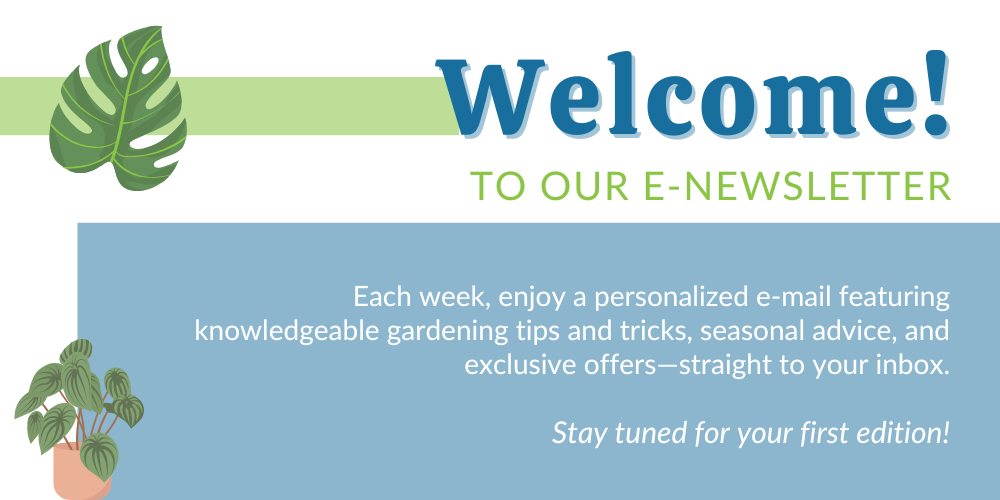
When someone joins your list, they should receive a structured introduction. A welcome email that shares your story, highlights core categories, and invites them in store sets the tone immediately.
Post Purchase Follow Ups
If someone buys a hydrangea, send care tips a week later. If they purchase vegetable seedlings, follow up with feeding guidance.
This reinforces expertise and encourages repeat visits.
Event Reminders
Workshops and seasonal events benefit from automated reminders. One announcement is not enough. A reminder sequence fills seats.
Seasonal Launch Emails
When spring arrives, customers should feel it in their inbox. Automated seasonal kickoff emails ensure you never miss those critical windows.
Automation reduces manual work, standardizes messaging across locations, and ensures customers hear from you at the right time. When mapped to the garden calendar, it becomes surprisingly straightforward.
Smarter Segmentation for Multi Location and Growth Focused Stores
Not every subscriber is the same.
For operators managing multiple stores, segmentation is essential.
Segment by Location
Promote events and inventory specific to each store. Avoid confusing customers with information that does not apply to them.
Segment by Interest
Some customers care deeply about houseplants. Others are vegetable gardeners. Others focus on landscape shrubs.
Tag subscribers based on behavior and engagement. Then send content that matches their interests.
Segment by Buying Behavior
Frequent buyers can receive early access to new arrivals. Dormant subscribers may need a re-engagement campaign.
Relevance increases open rates. Higher open rates lead to higher click through. Higher click through leads to more in store traffic.
Segmentation turns broad messaging into targeted conversations.
How Email Drives In Store Sales
General managers care about one thing: does this bring people through the door?
Done correctly, email directly supports in store performance.
Move Slow Inventory Before Markdown
Feature a category that needs attention. Educate on its benefits. Create a soft urgency before you are forced to discount heavily.
Fill Workshop Seats
Highlight limited spots. Share what attendees will learn. Include clear calls to action. A well timed reminder can fill remaining seats in days.
Promote Limited Availability Plants
If you have specialty varieties or small batch arrivals, email is the fastest way to create urgency.
Activate Seasonal Windows
Spring and fall are short windows. Use email to remind customers that the planting season is happening now, not next month.
When your email calendar aligns with your sales calendar, foot traffic follows. And remember, your emails often send customers to your website first. If event pages or product details are outdated, conversions suffer. Learn how to keep everything optimized in our Garden Center Website Maintenance guide.
A Simple Content Planning Framework
Structure creates results.
A practical monthly model might include:
- One educational email
- One promotional focus tied to a priority category
- One event or seasonal reminder
- Ongoing automated flows running in the background
Map this plan against your inventory calendar at the start of each season. Identify margin drivers. Identify slow movers. Identify key events.
If you are planning ahead for next season, review our Garden Center Trends 2026 guide to align your email content with where customer demand is heading
When content planning is proactive instead of reactive, email becomes a steady engine rather than a last minute tactic.
What Real Life Sales Driven Emails Actually Look Like
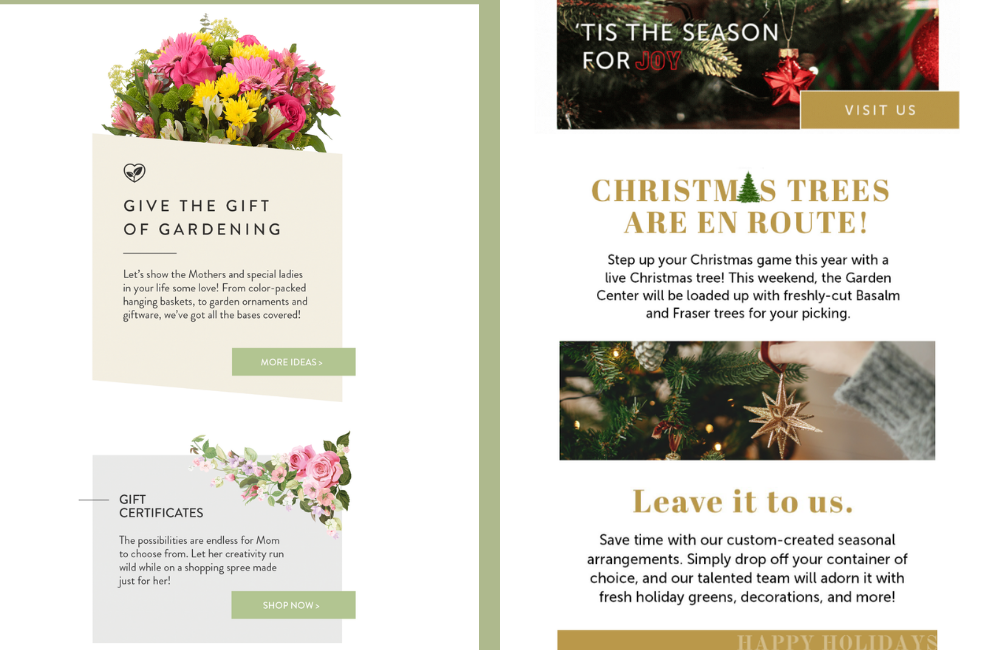
Strategy is important. Structure is critical. But sometimes what helps most is seeing how this plays out in real life.
Below are a couple of examples of emails that drive in store action. These are frameworks you can adapt to your own inventory, margin priorities, and seasonal timing.
[Example]
What to Track So You Know It Is Working
Keep metrics simple and tied to business impact.
Track:
- Open rate trends over time
- Click through rate
- In store mentions or redemptions
- Revenue tied to specific campaigns
The goal is not to chase vanity metrics. It is to understand whether your emails are driving behavior.
If open rates are steady but revenue is low, your offer may need work. If clicks are high but foot traffic is flat, your in store experience may not match the message.
Email performance should be evaluated in the context of overall sales, not in isolation.
Your List Is an Asset, Not a Side Project
Your email list represents years of trust, relationships, and local loyalty. It is not a side project. It is an asset.
The solution is not to send more emails. It is to send better ones. With clear goals, seasonal alignment, thoughtful segmentation, and structured automation, your list can become one of your most reliable revenue channels.
If your results feel inconsistent, it is likely a strategy issue, not a subscriber issue. With the right newsletter structure, automation setup, and seasonal content planning, garden center email marketing can move from occasional effort to dependable growth.
If your email list is underperforming, it is time to look at structure.
We help garden centers:
- Audit their current email strategy
- Build structured newsletter plans
- Implement automation that supports seasonal sales
- Develop content planning tied directly to inventory priorities
Book a consultation to review your current setup and explore how email newsletters, automation, and smarter seasonal planning can turn your existing list into a consistent driver of in store traffic and sales.