

Summer is one of the busiest seasons for garden center social media, yet it’s often the first marketing task to fall behind. Between helping customers, managing inventory, receiving new shipments, preparing seasonal displays, and keeping the business running smoothly, finding time to create daily social media posts can feel nearly impossible. The good news is that staying active online doesn’t require fresh content every single day. With a simple, repeatable system, your social media can continue supporting sales, building customer relationships, and keeping your business visible without becoming another overwhelming task on your to do list.
Why Social Media Starts to Slip During Peak Season
Every independent garden center knows the feeling. Spring and summer arrive, customers flood through the doors, trucks unload new plants every morning, staff are busy answering questions, and events begin filling the calendar. Suddenly, marketing takes a back seat.
This isn’t because you don’t value social media. It’s because your priorities naturally shift toward serving customers and keeping operations running efficiently.
Unfortunately, inconsistent posting has consequences that are easy to overlook.
Social media platforms reward businesses that post consistently. When posting becomes irregular, fewer followers see your updates. Promotions receive less visibility. Event attendance can decline, and customers may assume nothing new is happening, even when your greenhouse is full of fresh arrivals.
Many garden centers blame themselves for not posting enough, but the real issue usually isn’t effort. It’s the process.
If every social media update requires sitting down with a blank screen to think of something new, posting quickly becomes another stressful task. A better system removes that pressure by making every piece of marketing work harder.
Instead of asking, “What should we post today?” you’ll already have several weeks of ideas waiting to be scheduled.
Stop Creating Everything From Scratch
One of the biggest mistakes businesses make is treating every social media post as a brand new project.
In reality, nearly everything you’re already creating can become social content.
Think about everything your garden center produces throughout the season:
- Weekly email newsletters
- Blog articles
- Plant care guides
- Upcoming workshops
- In store events
- Seasonal promotions
- New product arrivals
- Staff recommendations
- Frequently asked customer questions
- Beautiful photos of displays and plants

Each of these assets can generate multiple social media posts.
For example, if your team writes a blog about watering container gardens during hot weather, you’ve already completed the hardest part. The research, expertise, and messaging are finished.
Instead of sharing the article once and moving on, you can continue using it for days or even weeks.
This approach saves time while reinforcing the same message across multiple marketing channels.
The same idea applies to email newsletters. Every featured product, gardening tip, seasonal reminder, or event announcement already contains content your audience wants to see. Rather than creating separate messaging for social media, reuse what’s already working.
This is one of the simplest ways to improve efficiency while keeping your communication consistent.
Turn One Piece of Content Into a Week of Posts
Repurposing content isn’t simply copying and pasting the same message several times. It’s about presenting the same information in different ways that match how people consume content on social media.
Let’s imagine you’ve written a blog called “Keeping Hanging Baskets Healthy During Summer Heat.”
Instead of publishing it once, you could build an entire week of content around it.
Monday: Educational Tip
Share one practical watering tip with a photo of colourful hanging baskets.
Tuesday: Product Highlight
Feature the fertilizer or watering tools mentioned in the blog and explain how they help gardeners succeed.
Wednesday: Customer Question
Post a common question your staff receives, such as why hanging baskets dry out so quickly, then answer it using advice from the article.
Thursday: Behind the Scenes
Film a short video of staff watering baskets or discussing how they care for displays at the garden center.
Friday: Short Video or Reel
Create a thirty second demonstration showing the difference between dry soil and properly watered containers.
Saturday: Weekend Reminder
Encourage customers to stop by for supplies before another warm weekend while reminding them to read the full blog for additional tips.
One article has now become six different pieces of content.
The same strategy works with email campaigns, seasonal sales, workshops, staff spotlights, and customer success stories.
Instead of constantly searching for ideas, you’re simply expanding on content you’ve already created.
Build a Simple Weekly Content Plan
Many businesses assume successful social media means posting every single day.
In reality, consistency is much more important than frequency.
Three quality posts every week often outperform daily posts created in a rush.
A simple weekly structure also removes decision fatigue because everyone knows what type of content belongs on each day.
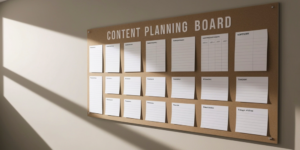
For example:
Monday: Gardening tips
Tuesday: Featured products
Wednesday: Staff recommendations
Thursday: Customer success stories
Friday: Upcoming events or workshops
Saturday: Seasonal reminders
You don’t have to follow this schedule exactly, but having repeatable categories makes planning much easier.
It also creates balance.
Instead of every post being promotional, your audience receives helpful gardening advice, gets to know your staff, discovers new products, and stays informed about upcoming events.
That variety keeps your social media interesting while naturally supporting sales.
This structured approach also supports broader garden center marketing efforts because every channel reinforces the same seasonal priorities.
Schedule Posts Ahead of Time
One of the easiest ways to reduce marketing stress is to stop creating posts every morning.
Instead, dedicate one block of time each week or month to planning content.
Batch your work.
Write several captions together.
Edit multiple photos during one session.
Record several short videos at the same time.
Upload everything into your scheduling platform.
Once scheduled, your posts continue publishing even while your staff are helping customers, unloading deliveries, or preparing weekend events.
Scheduling doesn’t remove flexibility.
You can still add spontaneous updates when something exciting happens, like a rare plant arrival, a sold out workshop, or beautiful greenhouse displays after fresh inventory arrives.
The difference is that your essential content is already covered.
Rather than scrambling to post something because several days have passed, you’re free to focus on running your business.
Many garden centers discover they spend less time creating content while maintaining a much stronger online presence.
Focus on Content That Supports Sales
Social media shouldn’t exist as a completely separate marketing activity.
Instead, it should reinforce everything else you’re already doing.
Every promotion deserves social support.
Every email campaign should inspire several posts.
Every blog should become multiple pieces of content.
Every in store event should receive reminders before, during, and after it happens.
When customers repeatedly see the same promotion through email, social media, your website, and in store signage, they’re much more likely to remember it.
That consistency builds awareness without requiring additional creative work.
Think of social media as one part of a connected marketing system rather than another task competing for your attention.
Garden center marketing is most effective when every channel works together instead of operating independently. If you’re looking for ways to better align your campaigns as customer traffic begins to change, our blog, How Garden Centers Can Improve Marketing Results Before Summer Slows, explains which marketing metrics are worth monitoring and how to make smarter adjustments throughout the season. It complements a simplified social media strategy by helping you understand what’s actually driving results.
The strongest marketing strategies don’t ask each channel to work independently.
They allow every channel to reinforce the others.
When your messaging stays aligned, customers are more likely to recognize promotions, attend events, visit your website, and walk through your doors.
Consistency shouldn’t stop with your online channels. Customers should experience the same promotions, messaging, and seasonal themes when they visit your garden center in person. Our guide, Creating Consistent Marketing Across Your Garden Center, shares practical ways to connect your social media, website, email marketing, and in store experience so every customer interaction reinforces your brand.
Measure What Actually Matters
It’s easy to become distracted by follower counts or the hope that one post might go viral.
Those numbers can feel exciting, but they rarely tell the full story.
Instead, focus on metrics that support real business goals.
Ask questions like:
- Are people engaging with our posts?
- Are they clicking through to our website?
- Are more customers reading our blogs?
- Are email signups increasing?
- Did our recent promotion generate more store visits?
- Are customers mentioning posts they recently saw?
These measurements provide much clearer insight into whether your social media is helping your business.
Small improvements made consistently over time usually produce better long term results than chasing short lived viral success.
Remember that your goal isn’t internet fame.
Your goal is bringing more customers into your garden center while building lasting relationships with your local community.
Keep Social Media Working for You, Not Against You
Managing social media doesn’t have to mean constantly creating new content or feeling pressured to post every day. The most successful businesses simplify the process by reusing existing blogs, email campaigns, seasonal promotions, customer questions, and events to create weeks of consistent content. Combined with realistic planning, scheduling, and a clear focus on business goals, your online presence can remain active even during the busiest parts of the season. A thoughtful garden center social media strategy helps support sales, keeps customers informed, and allows your team to spend more time doing what they do best: serving gardeners. If you’d like help building a tailored social media strategy, content plan, and scheduling system that fits your garden center, contact us to learn how we can help you stay consistently visible without adding more work to your day.
1 Comment
Fall Marketing for Garden Centers | Dig Marketing | Blog
[…] tips, photos, and short excerpts from each blog to build several weeks of content. Our guide on Garden Center Social Media explains how a simple, repeatable posting system helps busy garden centers stay active online […]
Comments are closed.