

Fall marketing for garden centers works best long before the first pumpkins arrive, yet many businesses don’t begin planning until summer is winding down. Before they know it, fall inventory starts showing up, customers are asking about seasonal plants, and the calendar quickly fills with events, workshops, and promotions. What seemed like plenty of time suddenly disappears.
The challenge isn’t a lack of ideas. Most garden center owners already know they want to promote mums, fall planters, trees, shrubs, bulbs, décor, and seasonal events. The problem is trying to build campaigns while also managing deliveries, merchandising, staffing schedules, customer service, and everyday operations. Marketing often becomes something squeezed into the end of the day, which usually leads to rushed emails, inconsistent social posts, and promotions that don’t receive enough attention.
The good news is that successful fall marketing doesn’t require working longer hours. It simply requires working earlier. By planning blogs and email newsletters before the busy season begins, you can create a steady flow of marketing that keeps customers engaged while freeing your team to focus on serving shoppers when traffic picks up. Instead of constantly asking, “What should we post today?” you’ll already have a plan in place that supports your busiest season.
Why Fall Marketing Often Feels Overwhelming
Every garden center experiences the same seasonal cycle. Spring demands nearly everyone’s attention, summer becomes focused on maintenance and inventory, and then fall quietly sneaks up.
Several factors contribute to the pressure.
Inventory often arrives in waves, making merchandising a moving target. Seasonal displays need constant updates. Staff members are busy helping customers, unloading shipments, and preparing for events. Meanwhile, marketing responsibilities rarely become any lighter.
When planning gets delayed, promotions become reactive instead of intentional. Emails are sent only after products arrive. Blog content is skipped entirely. Events receive minimal promotion because there isn’t enough time to build anticipation.
This creates hidden costs that aren’t always obvious.
Customers who never hear about your seasonal products may visit another garden center first. Educational opportunities are missed because helpful content wasn’t published before people started searching online. Promotions compete against each other instead of supporting one another because there wasn’t time to organize a campaign.
Perhaps the biggest cost is consistency. Marketing becomes unpredictable when every week starts with creating content from scratch. Instead of building excitement throughout the season, businesses spend valuable time simply trying to keep up.
Planning ahead changes that completely.
Start With a Simple Fall Marketing Strategy
A successful fall campaign doesn’t begin with designing graphics or writing emails. It starts with identifying what matters most during the season.
Begin by mapping out your major sales opportunities.
These may include:
- Early fall container gardening
- Chrysanthemums and ornamental grasses
- Fall tree and shrub planting
- Spring flowering bulbs
- Harvest décor
- Pumpkin displays
- Outdoor living updates
- Thanksgiving decorating
- End of season clearance events
Once you’ve identified these periods, establish clear marketing goals for each one.
Do you want to increase foot traffic?
Promote a seasonal event?
Sell through inventory before winter?
Increase email subscribers?
Each campaign should have a specific purpose rather than simply announcing products.
Next, create a campaign calendar.
Rather than viewing blogs, emails, social media, and in store promotions as separate tasks, organize them together around each seasonal theme. When every marketing channel supports the same campaign, your messaging becomes much stronger and much easier to manage.
Planning this calendar before inventory arrives also allows your purchasing, merchandising, and marketing efforts to work together instead of independently.
Use Blogs to Build Interest Before Customers Are Ready to Buy
One of the biggest mistakes many businesses make is waiting until products arrive before creating content.
Customers often begin researching weeks before making purchases. If your educational content already exists, your garden center becomes part of that research process.
Blogs give you an opportunity to answer the questions customers are already asking.
For example:
- When should I plant spring bulbs?
- How do I keep mums blooming longer?
- Which shrubs provide the best fall colour?
- How can I decorate my porch for autumn?
- What vegetables can I still plant?
These articles build trust because they help customers solve real problems before asking them to buy anything.
They also continue working long after they’re published.
Unlike many social media posts that disappear after a few days, blog articles can attract visitors through search engines for months or even years. Well written evergreen content becomes a long term marketing asset that supports multiple seasons.
Some excellent fall blog topics include:
- Choosing the Best Trees for Fall Planting
- How to Build Beautiful Autumn Container Gardens
- Why Fall Is the Best Time to Plant Perennials
- Preparing Your Lawn Before Winter
- Decorating Outdoor Spaces with Pumpkins and Gourds
- Fall Gardening Checklist for Homeowners
These educational articles naturally lead customers toward the products available at your garden center while positioning your business as a trusted local expert.
Turn Every Blog Into an Email Newsletter
Creating content doesn’t have to mean starting over every time.
One blog can easily become the foundation for an email newsletter.
Instead of writing completely new marketing pieces every week, summarize the key points from your latest article, include a few helpful tips, highlight related products, and invite customers to read the full blog on your website.
This approach saves time while giving each piece of content a much longer lifespan.
Your newsletters can also introduce seasonal arrivals, remind customers about upcoming workshops, announce limited time promotions, and feature staff recommendations.
Blogs and email newsletters also work better when they’re supported by consistent social media. Instead of creating entirely new posts every day, you can pull tips, photos, and short excerpts from each blog to build several weeks of content. Our guide on Garden Center Social Media explains how a simple, repeatable posting system helps busy garden centers stay active online without adding more work. When your blog, email newsletter, and social media all reinforce the same seasonal campaign, customers are more likely to remember your promotions and visit your garden center.
Consistency matters more than frequency.
Customers appreciate hearing from businesses that regularly provide useful information instead of only sending promotional messages.
Over time, this creates stronger relationships and keeps your garden center top of mind throughout the season.
When blogs and email newsletters work together, every piece of content has multiple purposes instead of serving only one.
Create a Repeatable Marketing Workflow
One reason marketing becomes stressful is because every campaign feels like starting from zero.
Instead, develop a repeatable workflow that your team can follow each season.
Begin by planning your blogs, email newsletters, and promotions together.
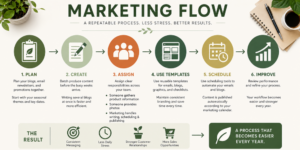
Once your seasonal themes are selected, batch produce your content before the busiest weeks arrive. Writing several blog articles in one session is often much faster than creating one article every week while juggling daily responsibilities.
Assign clear responsibilities across your team.
Someone may gather product information.
Another person can provide photos.
Your marketing coordinator or agency can handle writing, scheduling, and publishing.
Templates also make a significant difference.
Reusable email layouts, blog structures, promotional graphics, and campaign checklists eliminate unnecessary decision making while maintaining consistent branding.
Scheduling tools further reduce stress by allowing emails and blogs to publish automatically according to your marketing calendar.
The result is a process that becomes easier every year.
How Early Planning Saves Time During Peak Season
The greatest advantage of planning ahead isn’t simply better marketing.
It’s gaining time back when your staff needs it most.
When your campaigns are already scheduled, employees spend less time creating graphics, writing emails, or deciding what should be promoted next.
Instead, they can focus on helping customers, maintaining displays, receiving shipments, and creating exceptional in store experiences.
For multi location garden centers, planning early also improves consistency.
Planning your marketing early also gives you time to make sure every customer touchpoint is ready before seasonal traffic increases. Your emails may encourage someone to visit your website, and your blogs may bring in visitors through search engines. If your website is slow or difficult to navigate, those marketing efforts can lose momentum before customers ever walk through your doors. Our article on Garden Center Website Optimization explains why website performance plays such an important role in turning online visitors into in store customers, especially during busy seasonal campaigns.
Customers receive the same messaging across every location, promotions launch together, and marketing materials remain aligned regardless of which store they’re visiting.
Campaign performance also improves because your marketing has time to build momentum rather than appearing suddenly.
Educational blogs begin attracting search traffic before products arrive.
Email subscribers become aware of upcoming promotions earlier.
Customers start planning visits before competitors even begin advertising.
Less stress often leads to better results because thoughtful planning replaces rushed decisions.
When to Get Outside Marketing Support
Many garden centers eventually reach a point where internal resources simply aren’t enough.
If your staff constantly struggles to keep blogs updated, newsletters sent, and campaigns organized while also managing daily operations, it may be time to seek outside support.
A marketing partner brings more than content creation.
They help build long term strategies, develop campaign calendars, write optimized blog articles, manage email newsletters, and ensure every marketing piece supports your business goals.
This allows your employees to focus on serving customers while your marketing continues moving forward.
At DIG Digital, we often recommend pairing seasonal planning with educational content because it creates sustainable momentum instead of last minute marketing.
For example, if you’re preparing your autumn campaigns, our article on garden center midseason marketing offers ideas for maintaining momentum throughout the growing season, while our guide to garden center social media explains how social platforms can support the blogs and emails you’re already creating.
Rather than replacing your team’s efforts, strategic marketing support strengthens them by providing the planning and consistency that busy seasons demand.
3 Comments
Host It Once, Market It All Season | Dig Marketing
[…] planned, not once everything else is finished. For a broader approach to the season, planning your fall marketing for garden centers early can help you coordinate workshops with blogs, emails, events, and promotions before the […]
Email Marketing for Garden Centers | Dig Marketing | Blog
[…] Retention works better when it is built into your seasonal marketing plan from the beginning. Planning ahead also makes email marketing for garden centers easier to manage, giving teams more time to prepare useful seasonal content and promotions before fall gets busy. […]
Digital Marketing for Garden Centers | Dig Marketing | Blog
[…] Fall offers opportunities to discuss perennial planting, spring flowering bulbs, leaf composting, soil improvement, and winter preparation. […]
Comments are closed.