
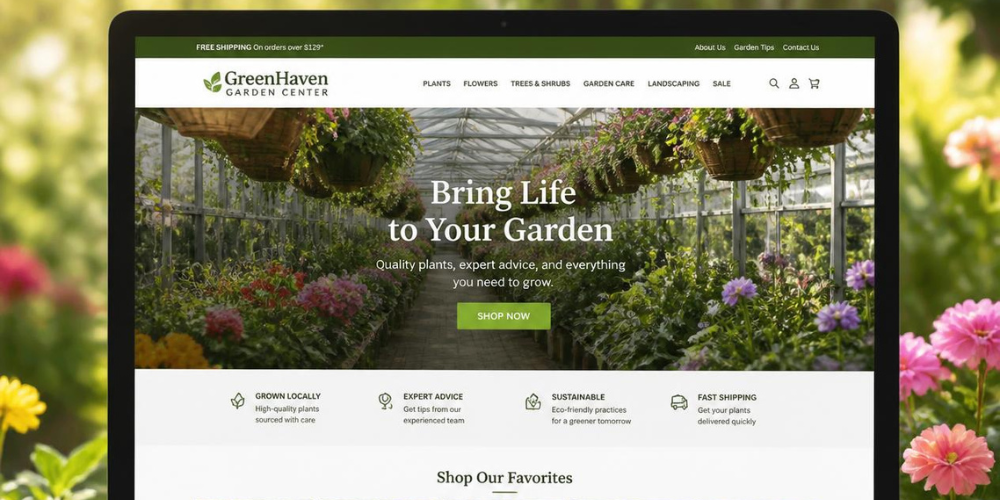
Garden center marketing is most effective when every customer interaction is smooth from the very first click, and for many shoppers, that interaction begins with your website. Long before someone visits your nursery, browses your seasonal inventory, or signs up for an event, they are forming an opinion about your business based on how your website performs. A fast, responsive website communicates professionalism, reliability, and trust. A slow or broken website can do exactly the opposite.
Many garden centers invest significant time and money into redesigning their websites, believing that a fresh look alone will improve results. While good design certainly matters, appearance is only one part of the equation. Customers care just as much, if not more, about how quickly pages load, whether product information is easy to access, and whether everything works properly on their phone or computer.
Website hosting, ongoing maintenance, and performance optimization all work together behind the scenes to create an experience that feels effortless for your customers. When those pieces are managed properly, your website becomes a dependable sales tool that supports every marketing effort throughout the year.
Why Website Speed Matters More Than Most Garden Centers Realize
Customer expectations have changed dramatically over the last several years. Whether someone is shopping for annuals, researching landscaping plants, purchasing gift cards, or checking your weekend workshop schedule, they expect information to appear almost instantly.
A delay of only a few seconds often causes visitors to leave before they ever explore your products or services. They rarely stop to think that your hosting provider may be struggling or that outdated plugins are slowing the site down. They simply move on.
For independent garden centers, this matters because customer decisions are often seasonal and time sensitive. During spring planting season, customers may search for hanging baskets on their lunch break, check if a particular tree is available before driving across town, or browse gardening supplies while standing in another store. Every second counts.
A fast website also creates confidence. Customers are more likely to browse multiple pages, read gardening articles, sign up for newsletters, and contact your team when the experience feels smooth. Those small interactions build trust long before they visit your location.
How Slow Websites Quietly Cost You Customers
One of the biggest challenges with poor website performance is that lost customers often leave without saying anything.
Imagine a customer clicking a social media promotion for your spring sale. The page takes too long to load, so they close it. Another visitor tries to register for an educational workshop, but the form doesn’t submit properly. Someone else wants to purchase a gift card, but the checkout page freezes on mobile. None of these customers call to explain what happened. They simply leave.
These issues affect nearly every part of your business, including:
- Online product browsing
- Event registrations
- Contact form submissions
- Gift card purchases
- Landscape consultation requests
- Store location searches
- Seasonal promotion pages
Many garden centers assume slower sales are related to advertising, inventory, or competition when the real problem is a website that quietly creates friction throughout the customer journey.
Because these problems happen behind the scenes, they often go unnoticed until someone actively monitors website performance and user behavior.
The Role of Reliable Hosting
Website hosting is often misunderstood because customers never see it directly. Think of hosting as the foundation your website is built upon. Even the most attractive website cannot perform well if that foundation is unstable.
 Reliable hosting provides the resources needed to keep your website loading quickly while handling spikes in traffic. Cheap hosting may appear to save money, but it often results in slower load times, unexpected downtime, and inconsistent performance.
For garden centers, this becomes especially important during busy seasons.
When spring arrives, marketing campaigns begin, email newsletters go out, Google Ads become more active, and customers start researching plants every day. Holiday promotions create similar traffic increases later in the year. Your website should be prepared for these busy periods instead of struggling under additional demand.
Quality hosting provides:
- Faster page loading
- Better uptime
- Improved security
- More reliable backups
- Greater stability during busy seasons
Hosting is not simply an IT expense. It directly affects how customers experience your business.
Why Ongoing Website Maintenance Matters
A website should never be viewed as something that is built once and forgotten.
Every website relies on software that requires updates. Content management systems evolve, plugins receive security improvements, browsers change, and technology continues moving forward. Without ongoing maintenance, small issues gradually become larger problems.
Routine website maintenance includes:
- Software updates
- Plugin management
- Security monitoring
- Regular backups
- Performance checks
- Broken link testing
- Compatibility reviews
Neglecting these tasks increases the likelihood of broken pages, outdated features, slow loading times, security vulnerabilities, and unexpected downtime.
Maintenance is preventative. The goal is not simply fixing problems after customers report them. It is preventing those problems from affecting customers in the first place.
For garden centers managing multiple seasonal promotions throughout the year, proactive maintenance ensures every campaign launches smoothly without technical surprises.
Performance Optimization Goes Beyond Speed
Website performance is much more than reducing page load times.
Performance optimization improves every aspect of how customers interact with your website. It makes navigation easier, keeps pages responsive on mobile devices, and helps customers quickly find what they need.  Fast-loading landing pages become even more important when customers arrive from Facebook or Instagram. If you’re looking to strengthen both your website and your social presence, our article on Garden Center Social Media shares strategies for creating content that keeps customers engaged long after they leave your store.
Several areas contribute to overall performance, including:
Image Optimization
Garden centers naturally showcase beautiful photography. Large image files, however, can dramatically slow down a website. Properly optimized images maintain visual quality while loading much faster.
Mobile Responsiveness
Most visitors now browse from mobile devices. Product pages, event calendars, contact forms, and navigation should all function effortlessly on smaller screens.
Efficient Code
Clean website code removes unnecessary processes that slow loading times. Visitors never notice efficient code directly, but they immediately notice when pages respond quickly.
Caching
Caching allows frequently accessed pages to load significantly faster by reducing repeated processing behind the scenes.
Database Optimization
Over time, website databases accumulate unnecessary information. Regular optimization keeps everything running efficiently while reducing delays.
Together, these improvements create a website that feels fast, reliable, and enjoyable to use.
Better Performance Supports Your Marketing
Every marketing channel becomes more effective when your website performs well.
Google Ads generate more value because visitors actually stay on the landing page.
Social media campaigns produce better engagement because customers reach content immediately instead of waiting for pages to load.
Email marketing drives more conversions because subscribers enjoy a seamless experience after clicking your links.
Local SEO also benefits from better website performance. Search engines evaluate user experience alongside content quality, making page speed one factor that contributes to visibility in search results.
Perhaps most importantly, performance optimization helps you generate better results without increasing advertising spend. Instead of paying for more visitors, you’re simply helping more existing visitors become customers.
Midseason campaigns often need to work harder as customer buying habits shift. A fast website helps every click count, especially during slower periods. Our guide to How Garden Centers Can Improve Marketing Results Before Summer Slows explains how to keep momentum going when the spring rush begins to taper off.
Work with Dig
At Dig, we specialize exclusively in marketing for independent garden centers. From reliable hosting and ongoing maintenance to performance optimization and digital marketing, we help ensure your website works as hard as the rest of your business, so you can focus on serving customers while we keep your online presence running at its best. Ready to improve your website’s performance? Get in touch with our team here.