
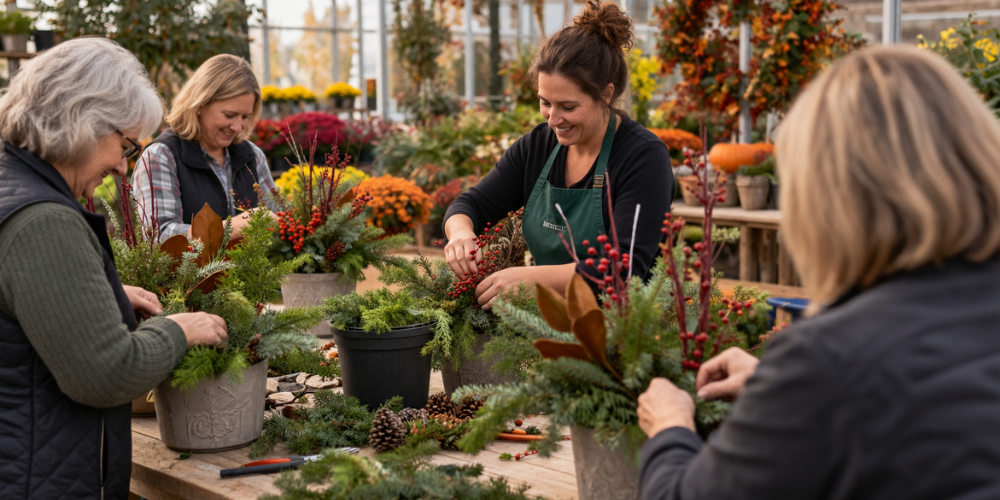
A Workshop Should Be More Than a One Day Event
Garden center workshop marketing works best when a seasonal class is treated as more than a single date on the calendar. A successful workshop takes planning. Your team develops the concept, orders materials, prepares the space, manages registration, trains staff, creates displays, and shares expertise that may have taken years to develop. Yet after investing all that effort, many garden centers give the event a few social posts and hope enough people notice.
That leaves a great deal of marketing value unused.
A fall container class, wreath workshop, holiday planter demonstration, or houseplant session contains far more content than the event announcement itself. There are plant choices to explain, techniques to demonstrate, design decisions to discuss, customer questions to answer, and finished projects to showcase. Every one of those elements can become useful content before, during, and after the event.
The goal is not simply to post about the workshop more often. It is to use the knowledge behind the workshop to create a connected seasonal story across your blog, email newsletters, website, and social channels.
Done well, one afternoon workshop can support several weeks of marketing.
Why Good Workshops Still Struggle to Fill Seats
A well planned workshop does not automatically produce a full room.
One of the most common problems is timing. A garden center may announce a November holiday planter workshop a week before it happens. By then, customers may already have weekend plans, the email may not reach them in time, or they may simply need more time to decide.
Another problem is relying almost entirely on social media. Social media is useful for visibility, but not every follower sees every post. Publishing an event once on Facebook or Instagram does not mean your audience has actually received the message.
There is also a difference between announcing an event and making someone want to attend.
Consider this message:
“Holiday Planter Workshop. Saturday, November 21 at 1 p.m. $75 per person. Registration required.”
It communicates the basic information, but it does little to create interest.
Customers want to understand the experience. What will they make? What materials will they work with? Can a beginner participate? Will staff help them choose greenery and arrange it? Do they take the finished planter home? What makes the design different from something they could simply purchase?
Those details turn an event listing into a reason to participate.
Instead of asking how many times you can announce a workshop, think about how many useful stories you can tell around it.
Start With a Simple Workshop Promotion Timeline
Workshop promotion should begin while the event is still being planned, not once everything else is finished. For a broader approach to the season, planning your fall marketing for garden centers early can help you coordinate workshops with blogs, emails, events, and promotions before the busiest weeks arrive.
For many seasonal workshops, promotion can begin three to six weeks ahead of the event. The exact timeline depends on your audience, registration capacity, price, and how much planning customers need.
Early promotion should establish the workshop and its value. Create a permanent page on your website where customers can find the date, time, cost, what is included, skill level, registration information, and what they will take home.
This is also a good time to publish related blog content. The blog can attract customers who are interested in the subject even if they were not specifically searching for a workshop.
Email can then introduce the event directly to customers who already know your business. Rather than sending the same event description repeatedly, each email can approach the topic differently.
Social media fills the spaces between those larger pieces. Show the greenery that arrived for the workshop. Introduce the staff member leading it. Share a quick design tip. Show last year’s finished projects if you have them. Answer a common question.
As the event approaches, messaging can become more specific. Mention limited availability when that is genuinely the case. Remind customers what is included. Show materials being prepared. Give them a glimpse of what they will experience.
Each channel has a job. Your website provides the destination and full details. Your blog builds interest through useful information. Email reaches an existing audience directly. Social media creates frequent visual reminders and personality.
They should work together rather than repeat the same announcement.
Turn the Workshop Topic Into a Useful Blog
Every good workshop is built around knowledge. That knowledge can become a blog before the workshop ever begins.
Suppose you are hosting a holiday planter workshop. Instead of writing an article entirely about the event, publish something useful such as “How to Choose Greenery for a Winter Container.”
You could explain the differences between pine, cedar, fir, spruce, and broadleaf evergreen foliage. Discuss how contrasting needle shapes create texture. Explain how branches, berries, cones, and decorative accents provide structure and color. Offer advice on keeping cut greenery attractive during winter.
Now you have an article with value beyond the workshop itself.
Within that content, you can naturally mention that customers who want hands on guidance can join the upcoming workshop. The event becomes an extension of the education rather than an advertisement interrupting it.
The same approach works across seasonal topics.
A wreath class can support articles about selecting fresh greenery or keeping wreaths fresh. A houseplant workshop can inspire content about winter watering, humidity, light, or pest management. A fall container class can lead to articles about cold tolerant plants, ornamental grasses, pumpkins, gourds, and seasonal color.
This approach also gives your website useful content that remains available after the event is over. Update it next season, link it to a new workshop, and the work you did this year can continue supporting your marketing next year.
Use Email to Build Interest and Drive Registrations
One email announcing a workshop is easy to overlook. A thoughtful sequence is much harder to miss because each message gives customers something different.
The first email can introduce the workshop and establish why it is worth attending. Focus on the experience, the finished project, and the expertise customers will have access to.
A later email can educate.
For a winter planter workshop, you might share three tips for choosing evergreen combinations, then explain that attendees will get to work with those materials during the class. For a houseplant session, share a useful winter care tip from the staff member leading the event.
As registration progresses, email can provide updates. If spaces are genuinely becoming limited, say so. You can also address barriers that may prevent someone from registering. Explain that beginners are welcome, tools are provided, materials are included, or staff will guide attendees through each step.
The final email closer to the event can create urgency, but urgency works better when customers have already been given reasons to care.
There is an important distinction here. Four emails that all say “register now” are repetitive. Four emails that introduce, educate, reassure, and remind create a story.
Your newsletter list is especially valuable because these customers have already expressed an interest in your garden center. Seasonal workshops give you a natural opportunity to deepen that relationship through education rather than sending promotion after promotion.
Create a Season of Social Content From One Workshop
Social media is where the volume of workshop content can really expand.
Start before registration even opens.
Show your team planning the project. Share the materials you are considering. Introduce the instructor. Film a short demonstration of one technique that will be taught during the workshop.
Once registration is open, continue showing rather than simply telling.
A holiday planter workshop might generate social content around choosing a container, comparing evergreen textures, adding height with branches, securing stems, selecting ribbon, incorporating berries, and caring for the finished arrangement.
That is already several distinct posts from one event.
As the date approaches, show materials arriving and staff organizing the workshop space. These glimpses behind the scenes make the event feel tangible. Customers can see that something is happening rather than reading another graphic with a date and registration link.
During the workshop, capture content intentionally. Photograph the room before attendees arrive. Get images of materials laid out. Capture hands working with plants and natural materials. Photograph finished projects. With appropriate permission, record short clips of participants creating their arrangements.
You do not need to publish everything immediately.
A strong collection of photos and videos gives your marketing team a library of seasonal material that can be distributed over the following days and weeks.
One workshop can realistically produce a dozen or more useful pieces of social content when the content is planned in advance.
Keep Marketing the Workshop After It Is Over
When the last attendee leaves, the marketing opportunity is not finished.
In many ways, this is when you gain some of your most persuasive material.
Before the workshop, you are telling customers what the experience will be like. Afterward, you can show them.
Share finished projects. Post a collection of different designs to demonstrate how attendees interpreted the same materials. Share a tip the instructor discussed during the class. Turn a common participant question into a short educational post.
Testimonials are particularly useful. A short comment about how approachable the instructor was, how much someone learned, or how pleased an attendee was with the finished project can help future customers understand the experience.
You can also return to the original blog and add useful insights that emerged during the workshop. If attendees repeatedly asked how long evergreen arrangements should last outdoors, that is a sign your wider audience may have the same question.
 Email provides another opportunity. A post event newsletter can share workshop photos, offer an additional care tip, and introduce the next class.
This creates continuity between events.
Instead of starting from zero every time you launch a workshop, you begin the next campaign with proof that customers attended, enjoyed themselves, learned something, and created something worth showing.
Over time, your event marketing becomes stronger because every workshop contributes material to the next one.
Build a Repeatable Content System for Every Seasonal Workshop
The easiest way to get more value from workshops is to make content planning part of event planning.
When your team chooses the workshop topic, identify the marketing opportunities at the same time.
Decide what educational blog could support the subject. Determine which emails need to be sent and when. Create a list of social content that can be captured before and during the event. Assign someone to take photos and short videos. Write down the questions customers ask so they can become future content.
The process does not have to be complicated.
For each workshop, aim to create one substantial educational blog, several emails with different purposes, a series of social posts before the event, planned photo and video coverage during the workshop, and follow up content afterward.
Then connect everything.
Social posts can direct people to the educational blog. The blog can introduce the workshop. Emails can link to both the article and registration page. Post event photos can promote the next workshop. Common questions can become future blogs or newsletter topics.
This is where individual marketing activities begin to function as a system.
It also makes content creation easier. Instead of sitting down every week wondering what your garden center should post, you are working from actual seasonal activity happening inside the business.
Your workshops become part of your content calendar, and your content calendar helps make your workshops more successful.
Promote Fall and Winter Workshops
A seasonal workshop should create more value than the ticket revenue generated on one Saturday afternoon.
It can demonstrate your team’s expertise. It can introduce customers to plants and products they may not have considered. It can bring people into the store during quieter periods. It can create photographs, videos, testimonials, educational ideas, and customer questions that strengthen your marketing throughout the season.
Most importantly, it gives your business something real to talk about.
Garden centers already have an enormous amount of expertise inside their walls. Workshops concentrate that expertise into an experience customers can participate in. Blogs, newsletters, and social content allow that experience to reach far beyond the people who were physically in the room.
The opportunity is not to create more content for the sake of staying busy. It is to get more value from work your team is already doing.
DIG Digital can help build that system. Through blog writing, email newsletters, and social promotion, we help garden centers turn individual events into coordinated campaigns that educate customers, build interest, and support registrations. A thoughtful garden center workshop marketing strategy means you can host the workshop once while the expertise, stories, visuals, and customer interest continue working throughout the season.